1,000 Embers

While getting to the other side of the holiday season, my family picked up strep and pink eye. Then just as we were starting to get better, Los Angeles burst into flames. Thoroughout all of this I’ve been trying to finish up an essay for an application with a prompt related to place, power, community, and archives. In all the goings-ons I mis-read the prompt as asking for 1,000 WORDS, when in fact, it was asking for 1,000 CHARACTERS.

I felt pretty good about it (better than I do about the 1,000 character version I quickly chopped together!), so I’m going to post a blog-i-fied version of it here. It felt cathartic to write this, in lieu of non-stop refreshing a Google search for “los angeles fire” over and over again for a second day in a row.

Because I was trying to be professional in this essay, I did leave out my most gutteral, repeated thought during these last days: that LA is a stupid place, but I love it so deeply and dearly. And am heartbroken for my big-city-patchwork-of-neighborhoods community.


As I was completing the final touches on a draft description to outline my relationship to my work environment as place, wind swept embers into raging fires and upended my broader community. Los Angeles is a large city of neighborhoods, and although they can be distinct and unique, we are all still knit together and connected. The city has a long history of violent division and social disparities, but it is our differences that are also often part of the local beauty of this place. And we are united when we are all under threat.

I am not from Pacific Palisades or Altadena, but these microcommunities in my city community are still part of the interconnected body that make up the city at large. The thick chunks of ash sprinkling down on my neighborhood are pieces of someone’s home, someone’s sense of hope, someone’s sense of safety. Thankfully my rental abode retained power, and we weren’t under an evacuation order, but the pain of seeing those in your place, your city, have these things wrenched from them so quickly, and with such violent force – I cannot help but feel an ally in community. Although we are different and experiencing different things, we are together in pain for this physical environment we shared and the varied things that a place can promise us (whether real or illusioned). 

We checked on coworkers and friends; many under evacuation orders. One friend watched her son’s preschool burn down on television. How do you retain a sense of place and community when the physical representation of that history goes up in smoke? There are many parts of the United States where the scars of history are not physically represented, but represented in intergenerational trauma and invisible scars that the bearers are not always even cognizant of. Our bodies are sites of history. The archival record can also provide a sense of place when geography is decimated.

Los Angeles is my adopted home, but my ancestors aren’t from here – neither indigenous nor early colonizing migrants. As a kid I lived in a few different states, and as a mixed race person, there is no one singular place that I belong to; where my whole self will be seen and recognized. My existence is a record of 20th century American imperial military incursions. Feeling unmoored can be personally challenging, but there is also power in not being anchored to a singular idea.  I must make a future space for myself and my communities outside of the dominant historical, social/cultural boundaries of “race” and “ancestry” that American culture has defined as tools of political control and power. 

As a teaching faculty librarian, I work with a student body that the government labels as “HSI” or a Hispanic-Serving Institution, which means at least 25% of our full-time equivalent campus undergraduate student body identifies as Hispanic or Latino. We also have deep pride on campus for the work of campus leaders (students and faculty) in the late 1960s in founding some of the earliest Chicana/Chicano and Africana Studies programs in the United States.

As instructional faculty, I sit by default in a position of power. I am not Latina or Black, yet the students in my classes often are. As a perceived white-only person, I call out our archives’ historical collecting problems, the bias in the collection development process, and our on-going (and endless) work related to reparative description. I allow myself to be vulnerable, and try to center the humanity of people represented in our archives, connecting students with the idea that their own histories are valuable, and that they have the power to shape new historical narratives that go against dominant white, heteronormative, male takes on the past.

What I want to convey to students is the need to understand where we are, who has historically defined our places, and the need to unmoor ourselves from what holds us back from transformation. The need to be comfortable with the unknown and the gray areas when things are not well defined, as we search for new ways of being and knowing. At the same time, I have to be careful with my default faculty power, and make sure to allow myself to be humble about what I do not know.

In the archival field we are trained to impose order over chaos; to label everything in a uniform and recognizable fashion; to make things findable, often at the cost of individual authenticity. Both in what I do with students, and in what I do in leading our archives unit’s accessioning and processing workflows, is with the aim to create a space where it is safe to question what is established. I want students to see archives as a fluid and conflicting space to interrogate, as well as a space where there is room for their own stories. In this same way I want our Archivist team to feel supported in doing work, while also having space to question established practices. To have empathy for past archival missteps, is to also make space for us to forgive our present missteps, priming a space for reflective growth.

Our work place is safe amidst these fires. As the firefighters work to control and dampen down the blazes, we must mourn, and prepare to reshape our sense of place and our relationship to one another in this sprawling city-community. We will need to remember and reflect, while also letting go to make room for more nuanced narratives. Archives can play a role in helping us do this work, as individuals, as members of broader and continually evolving communities, and as a nation.

As I am not “from” here, I sometimes forget that Los Angeles is my place too. But these catastrophic fires are a strong reminder that this IS my place, and I am in and of community here. I am lucky to be in my physical home tonight, but my heart is aching for my community home.

Julia Holt, Student Government and Basketball Leader

So many of my genealogical musings have centered either on navel gazing or on highlighting the sensational. When looking for ancestral bread crumb trails, it’s much easier to find a newspaper article decrying violence, drug use, or some other kind of debauchery. Occasionally there is a social note that reads like old-school Facebook (Mrs. So-and-so went to the neighboring town on Saturday for a picnic and a visit to Mrs. This-and-that). But the bits that have a little more meat to chew on are the series of articles about a shooting, or an arrest, or something along those lines with a point of debate. (Did it really happen that way??)

I’ve spent a lot of time gathering info on what happened to Andrew Holt, because it’s low-hanging fruit and plays into a true crime sort of interest, as well as an interest I have in understanding what it was like to live in Oklahoma’s Love County and Carter County in the early 20th century. What was life like on that part of the Red River straddled by Texas and Oklahoma? What led people to make choices or be impacted by a system that led them to be sensationalized in the newspaper?

The last few years of my personal life have been really packed with living in the present, so I haven’t had a lot of time to muse in the past lately. But I do have just a few moments now to pick up something I was working on a few years ago when I came across a whole series of newspaper nibbles that have an entirely positive angle. In the early 20th century The Marietta Herald had sections with local town news, including Greenville, Love County, Oklahoma. And in these pages I see a piece of an ancestor that I’ve heard so many stories about – yet there is still more to learn about who she was.

Nannie who had red hair and a love of flowers. Nannie who married and divorced my great grandpa twice, and then was buried next to her friend Woodrow. Nannie who sold Studio Girl cosmetics. Nannie who went to almost all my Mom’s basketball games growing up. Nannie who cared for everyone.

I have fuzzy childhood memories of visiting Nannie when I was young, before she passed away in 2003. Since then she’s lived on in stories from my own Mom and Grandma, and others in our family who also have living memories of her. But there’s also a part of Nannie, of Julia Holt, in the newspaper that is not sensational, but is also so us, in her work ethic, in her activities, in her organizing. And part of processing the complicated past is not only engaging with the family history true crime genre. There are past things to reckon with, but there are also people to love.

In the Marietta Monitor Greenville section, Nannie is listed as sophomore class Vice President in December 1928. She was also the basketball team captain for at least two years. Commenting on the captains, the Monitor said, “Good leaders mean much for any activity. It would be hard to find better sports than Sam [the boys team captain] and Julia.” (She was guard on the basketball team, which makes sense based on how tall our family is, hah!) The following year Julia was class Secretary, and as a senior she was once again Vice President.

As a kid I organized clubs in elementary school, then volunteered and ran for high school student government. Now I volunteer for professional society committee leadership. And here is my great grandma, doing this almost 100 years ago! 

While Julia’s older brother Andrew Holt became tangled up with prohibition, alcohol, and law enforcement, his little sister led in student government and basketball. I won’t stop exploring the challenging dark parts of the past, but there is also a need to highlight the good. And know that nothing is absolute – acknowleding the good is not erasing the dark, and vice versa. Like most everything else, the past is complicated. There’s more of mine to mine in the Marietta Monitor, but that’s all the time I have to muse about the past today.

An American on Stolen Lands

Back in May I started writing a bit on the complicated cultural inheritance of having a diverse ancestry as an American. There is a lot more I want to explore about this topic, so I initially had some hesitance with posting this first draft. But earlier this month I presented on a panel about being a mixed race information professional, and that was the right nudge to make me go back, revise a bit, and release this out into the blog world. I don’t have a lot of answers yet, but I think part of what this is about, is being reflective with a means toward reconciling intergenerational cultural and social inheritances with my own identity in the present.

——–

The only time I can remember feeling Japanese as a kid was the first time I read about the incarceration of Japanese Americans in internment camps in World War II. I learned that Americans who were as much as 1/16th Japanese were taken away and placed in camps. This was shocking to me. My Grandma was Japanese, so I am 1/4 Japanese. I could be put in an internment camp? I wasn’t raised with a sense of being anything other than an American, so the idea that the early 1940s American government would view me as an enemy of the state seemed completely ludicrous.

While I was growing up in the San Francisco Bay Area, many of my friends were first generation Americans. It was normal to hear my friends call their parents and speak in a multitude of languages. Going out for pho or boba was a normal high school hang activity and when we hung out at a friend’s house I was well trained to always take my shoes off. My friends clearly identified with and lived a life that was an echo of their parents’ upbringing outside of the U.S. I felt culturally lacking in light of all these parallel American experiences with strong recent cultural ties to places other than the United States. While my friends were Americans plus, I felt only culturally American. I couldn’t call my Dad and talk to him in Japanese. At home we mostly ate food that reflected an inheritance of a mid-20th century American culinary tradition of things that came prepared in boxes and were heated in boxes of the microwave or oven variety.

As a teenager my friends and I loved to take BART from the East Bay to San Francisco. Chinatown was a great place to go out for food, but Japantown felt like little more than a Japan themed shopping center. The only Japanese kid I knew was a child of recent immigrants like the rest of my friends. My Japanese Grandma Machiko passed away in 1994, when I was still in the single digits age range. Even when she was alive we lived far apart. My limited memories of her are only fragments and I often wonder if these are constructed from stories told to me. Not only does my Japanese identity feel false, but so too does my shaky connection to my heritage.

I was given little nudges to be interested in my Japanese background. I had a book about Japan, but none of it resonated with me and it remained a remote curiosity. I might as well have read a book about the Philippines. A couple times my Grandma’s sister and a few cousins came out to visit us in California. They brought gifts, including origami paper. It was a cultural symbol, but I couldn’t connect on an intimate level with little squares of beautifully patterned, colorful paper. I had little squares of Japanese culture, but these were pieces of a mostly impersonal version of the very personally resonating concept of culture.

Sure, I’m Japanese by blood and descent, but how can I be Japanese without the culture?

——–

There’s no doubt that part of my interest in genealogy is due to an early exposure to rich and diverse cultures. I didn’t grow up where either of my parents grew up, and I had friends with such strong traditions and identities. It made me wonder what the pieces were of my own heritage, when I didn’t fit into any of the frames of reference I saw with my friends.

In addition to being Japanese, I also have a strong 1/4 thread of Eastern European from my other Grandma. I can’t say that I feel particularly allied with that history either, but at least I have living relatives in other states that can easily answer questions about our family. I’ve eaten a poticia and know about Polish Easter breakfast. I’ve heard stories about my Catholic great grandpa carrying around rosary beads and shifting his observed birthday to the birthday of the saint he shared his name with. That left only the other half of my identity, a grab bag of Western European heritage, as a mystery.

Thankfully I had a head start on the third quarter of my heritage, as my European-American Grandpa got really into genealogy in the 1970s and plotted out an impressive array of British, German, and French ancestors. That left my final mystery quarter from the other side of my family as a detective case for me to tackle. It turns out that I have pretty deep roots in early Tennessee. Learning that I descend from those who owned other humans in Tennessee, and earlier in Virginia and North Carolina, was shocking. I had always assumed that my southern rooted family was financially broke and not morally broken. Yet, the Holts of Tennessee, and the families that married into the Holts, enslaved humans over several generations.

I can’t immediately perceive anything about my life and culture that has come down to me through this heritage. What am I suppose to do to reconcile this legacy guilt? How can I make reparations in the present for being a descendant of a culture that I find repulsive and have no desire to connect with? As much as I long to connect with being Japanese, I also want to distance myself from the horrors perpetrated by my Tennessee ancestors. Yet I feel a guilty desire to know more, to try to understand – who were these people and why were they complicit in this system? In what ways have I been quietly shaped by this hushed inheritance? And can being loud about it be productive?

——-

I moved to Los Angeles ten years ago, and living in Los Angeles led me to feel a renewed pull and interest in any latent Japanese-ness through meeting others who were also partials. I’ve also met several descendants of those that were interned by the United States government in World War II, simply for having Japanese ancestry. I’ve been asked several times about my own family’s internment experience, which always gives me a sense of mild embarrassment. No, no, my ancestors actually were the enemy, as they were still in Japan during WWII. Then that moment of connection with other Japanese descendants becomes a little tarnished. Do we really have a shared history and heritage?

There’s an initial disarming comfort about meeting Japanese-Americans with deep Los Angeles roots, but ultimately Japanese-American history in Los Angeles does not feel like my history. My Grandma was the only one from her family to immigrate to the U.S. and she didn’t really settle down here until the early 1960s. Here wasn’t even the West Coast – she spent the rest of her post-Japan life in suburban Cincinnati, Ohio.

The only place I’ve really “seen” my Grandma is in the documentary Fall Seven Times, Get Up Eight. The documentarians seek to bring out the stories of Japanese war brides who “disappeared into America.” The idea of disappearing into America hurts my heart and is maybe part of my motivation to find a way to be more Japanese-American in my own way. This documentary also reaffirms my belief in the importance of being able to see yourself in stories about what it is to be a human. Seeing yourself or your ancestry depicted in the media and in archives is an affirmation of legitimacy.

At the same time, there can be a very fine line between appropriation and cultural pride. Can I be an appropriator of my own culture? Reclaiming ancestral culture that’s been stripped or watered down, without feeling that it is performative – can this be done?

——–

Somehow it feels far easier to claim a heritage that is an assault against humanity. It is strangely somehow easier to feel guilt above other emotions when it comes to cultural background. I can claim the enslaving ancestors because I have no pride in it. From this inheritance I only have my privilege of mostly being perceived as white, made doubly guilty by society’s denial of my Asian-ness. I am a descendant of enslavers, and it is dirty, I have shame, but it is my inherited shame. Yet I don’t feel ownership over my Japanese-ness. Why is this?

Killing or dispossessing another human of their freedom is a pretty timelessly evil thing to do. Some try to absolve past crimes through the historical context argument – weren’t Franklin D. Roosevelt, Andrew Jackson, and Thomas Jefferson “great men”? Yet there were also plenty of contemporaries to these so-called “great men” that saw the human destruction through the layer of societal complacency.

I carry this legacy guilt with me and I can’t travel back in time to change the past. Being cognizant of the damage my ancestors caused, and being thoughtful when framing their actions is a step one. There is no absolution or glorification of their actions and choices. Their purported kindness or generosity to those they enslaved does not change the fact that they were part of a system that held people captive and stole their lives. Being careful to refer to those they enslaved as humans that were enslaved, rather than “slaves,” is a minor language item that restores a modicum of dignity to those they gravely wronged. I grew up taking history classes that referred to people as “slaves.” In adulthood, I learned to start using the term enslaved instead, and it is pretty incredible how much a terminology shift can be a humanity restoring mind flip.

———

I’ve often felt like my body and culture are held hostage by the judgment of outside forces. When I think about the heritage/identity boxes I can place myself in, maybe the answer is that I really am none of the above. That maybe there was some lesson in the frustration I felt every time I had to fill out a form that required me to be “other,” or forced me to choose to ally myself with only one part of my identity. That I have to create something new that is fused from parts both known and acknowledged; unknown and to be explored. The little tendrils drilled down into DNA and words that I hadn’t even realized existed, coupled with the grooved paths I have to create on my own through repetition.

Walk this new path, walk this new path, walk this new path. And one day there will be no more grass on that ground. No more walking through overgrown weeds. It will exist as path alone.

This is the challenge and inheritance of being an American on stolen lands.

Alive.

It’s been awhile since I’ve written anything here. As the days and months ticked by, all that time gone by seemed to pile up into some mountain that looked impossible to climb. The further out from spring 2016 I got, the more difficult the thought of writing became. Part of this distance between easy peasy, chill blogging for fun, and OMG how am I going to write anything coherent, was a very challenging year from late 2016 through most of 2017.

In January 2015 I went back to school again, but continued to work full time. At first it was easy enough to keep up and maintain some sort of normalcy, but as I finished all the intro courses and began to delve into more complex topics (JavaScript almost killed me), keeping up with school on nights and weekends got tougher. In addition to that, I was busy spending my days preparing to move a three story library with no elevator to a new facility.

The move project was yet another temporary job at a workplace I loved. Over the seven years I worked there, having a somewhat annual panic about whether I’d have another project there the next year was a sort of anxious, yet normal state of being. About once a year I’d worry I wouldn’t have another project, but then something would pull through, always with the hope that eventually it would be a permanent gig. Things finally looked promising when a proposed permanent position made it into the budget and survived a few rounds of budget trimming. Alas, in December 2016 I found out that the job didn’t make it through the last brutal budget cut. Not only would I not have a permanent position, but the funds were finally drying up in the temp project fund too.

I had a little temp project cushion to find another job, but that meant that by Spring 2017 I was working full time, doing three graduate school classes (one being my final portfolio project), and applying to and interviewing for potential new jobs. Losing a workplace I loved, coupled with the stress and now very pressing need to finish my library science masters ASAP, along with job applications and interviews (and the very real possibility of having to move away from my beloved Los Angeles) – it all really did a number on me. I graduated. I got another job. I’m still in LA. But honestly I needed the second half of 2017 to remember who I am outside of work and school. I think this is complicated by the fact that what I do for a living is part of who I am off the clock too. What do I do for fun that isn’t work related?

I’ve been compiling a growing list of things I want to write about, but instead of writing about any of these topics, I continue to add to this list. I’m pretty jazzed about a lot of the subjects, but I think it’s been my way of avoiding returning to this blog. There isn’t enough research done yet. I have to outline things. I need to take time and do fresh genealogy research. I think I like plants now? But do I want to write about plants? And other thoughts – like, do my friends still want to spend time with me after I neglected them for two years?

So this is a sort of whiny, weaksauce post that does more for me therapeudically, than it contributes to some greater internet knowledge base. At least it’s a post. I’ve broken through the blog writer’s block. I’m here, I’m alive, I’m ok, and getting more ok by the day.

Faces to go with Names.

Here is a portrait of James A Graham (1855-1925) and Viola Alice (Allie) Kelly (1858-1923), my great, great grandparents referenced in the last obituary post.

Graham_JamesArmstrong

James A Graham (1855-1925) and Viola Alice (Allie) Kelly (1858-1923)

Remembrance in the 1920s Newspaper.

While my mind is still musing on the modern-day obits section of the newspaper, here are two obituaries from my Ohio side of the family. James A Graham (1855-1925) and Viola Alice (Allie) Kelly (1858-1923) are my great, great grandparents. They lived in Adams County, Ohio at the end of both of their lives.

The obits are actually pretty diverse. James’ spends a good deal of time detailing his last day of life, while Allie’s focuses primarily on her virtuousness. Could it be gender at play, or diversity in obit author styles?

Scan_20141130 (7)

Obituaries for James A Graham (1855-1925) and Viola Alice (Allie) Kelly (1858-1923)

How Not to Write An Obituary.

I use to read the obituaries every week in the Sunday Los Angeles Times. I’d look for the oldest person to die and then read their obit for inspiration. Where did they come from? What did they do with all that time they had? And, there was also a tinier voice asking, “How do I get to where they were? How can I absorb so much of life too?”

Then there were always the sad obits. They were of people of my own age, my parents’ ages, friends’ ages. There were the little annual memorials to kids lost far too early; reminders that the memory of them continued to age, though they did not. It was these obits that started to bring me down. I started to identify a little too closely to some stories, some timeframes. In the older obits any form of identification was a bonus, but with these young departed it was too real a reminder of what obituaries signify: someone has left the building.

2016 has been a rough year for death, and particularly for music fans, as several well-known and loved lumnaries of the profession have passed on. On Thursday I found out that my Great Uncle Jerry moved on. He’d been sick for years, in a slow, slow decline that gradually robbed him of the ability to do many of the things the able-bodied take for granted. He wasn’t a musician, but I did learn very recently that he enjoyed photography.

It was almost a funny thing to learn that he liked photography. I knew he worked as a truck driver for years, as he’d tell stories from the road. In all non-obit-like honesty, Jerry presented himself as a tough trucker guy from rural Oklahoma. He’d sit around the house, smoking away, and puffing out homophobic, sexist, and racist things in a loud voice (when he still had a volume dial to turn up on his vocal cords). I never knew anything about him acting on any of his words, but the words were still tough to hear sometimes.

Is this speaking ill of the dead? It is at least speaking truth. I don’t aim to rob him of his humanity by glossing over the way that he presented himself. At the same time I don’t aim to portray him negatively either. I don’t aim to portray him in any other way than the very way he portrayed himself.

I think where this becomes complicated, is that the public presentation of self is often conflated with things that reside outside the self, or roles we are trying to play in society. Depending on the person it can be easy to be consumed by the reflection you’d like to see, rather than drawing on an internal well. It’s tough.

I think there are lovely things about Jerry that I never knew. There was something in him that my Great Aunt saw, and I adore her. He had a good wit, though it was often misdirected to social baggage better left behind in the 20th century. I don’t know enough about where he grew up and what formed him in his early years. I want to know more, I want to better understand.

In the meantime I will remember Jerry. I can’t bring myself to honor the dead by distorting the past, but I can respect the context in which people lived, and strive to better understand all angles of humanity. And sometimes I still sneak a peek at the obits page, and sometimes there is still beauty and inspiration in death.

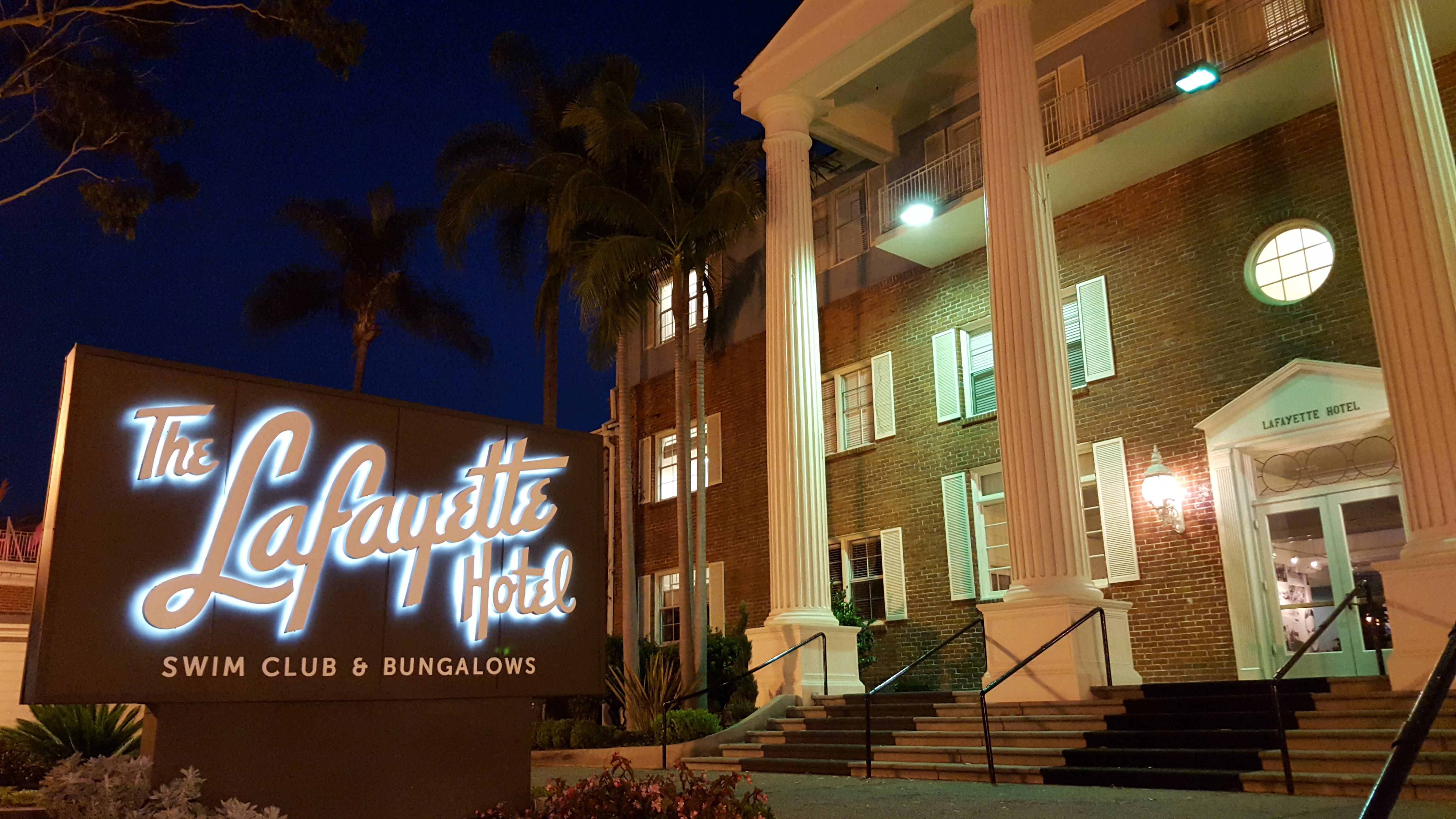
Roadside: The Lafayette Hotel, San Diego, California

20150827_195346

I use to find myself in San Diego more often, but these days I barely even get as far south as Orange County. The work and school double header schedule keeps me on my toes (or more accurately keeps my butt glued to a chair and my eyes crossed in the glow of a computer screen). Thankfully this summer a work conference pulled me out of my orbit around the center of Los Angeles, and sent me out into the wilds of the Balboa Park region of San Diego.

I have a soft spot for old hotels, and when I get to pick the pillow I lay my head on at night, you can bet it’s going to be in a location that’s at least twice my age, if not older. The bright side to this travel affinity is that older hotels are often cheaper, or at the very least equivalent in price, to a decent mid-range modern chain. That was definitely the case on my recent conference jaunt, that led me to a very budget friendly but snazzy stay at the Lafayette Hotel.

20150827_173959

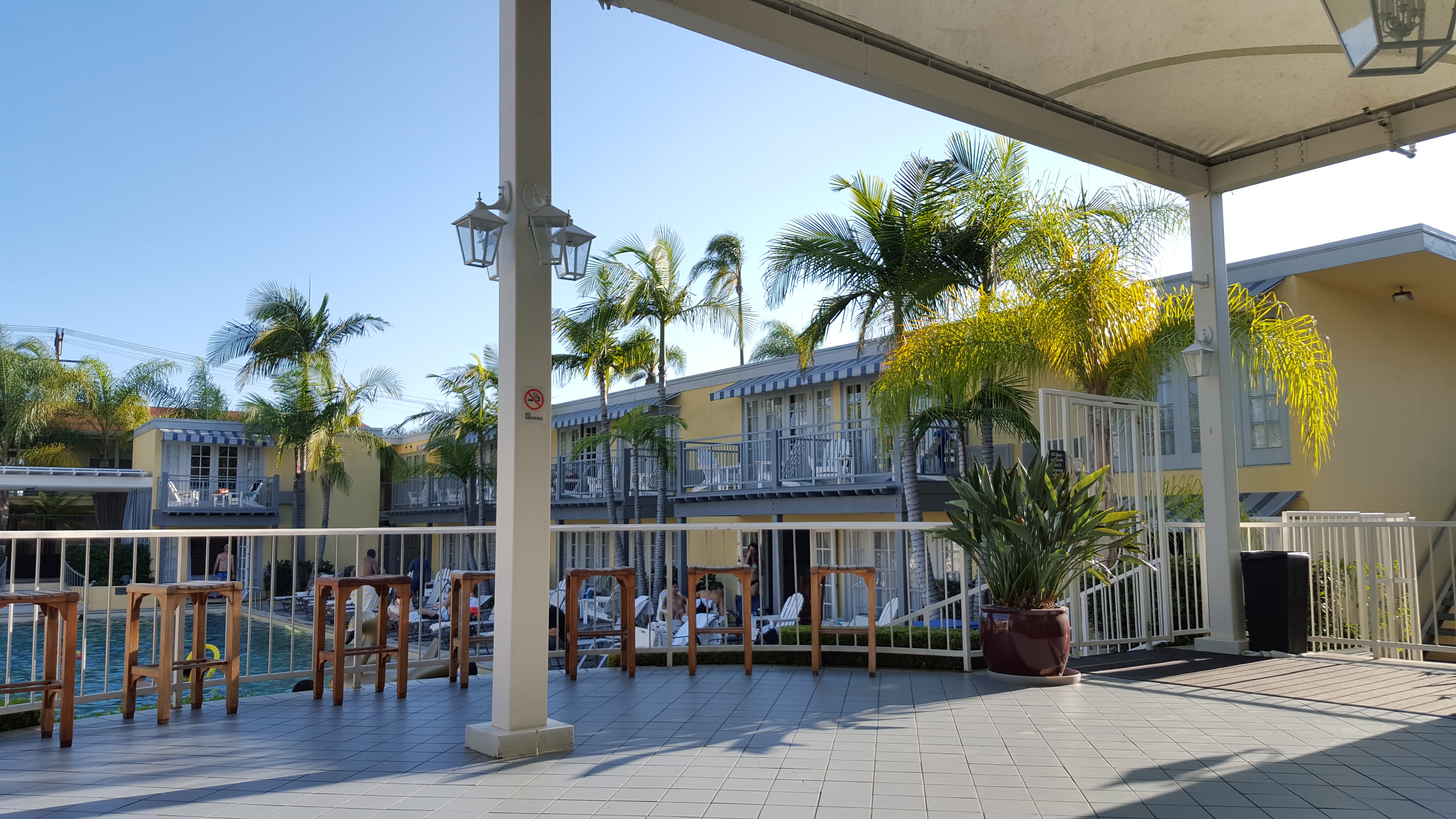
The photos on the web really don’t do the location justice. Sure, there’s a great pool and it was in a convenient location for Balboa Park. But what tops it all is the lingering mid-century pizzazz. It’s like all those years of star stays left a little sparkly residue.

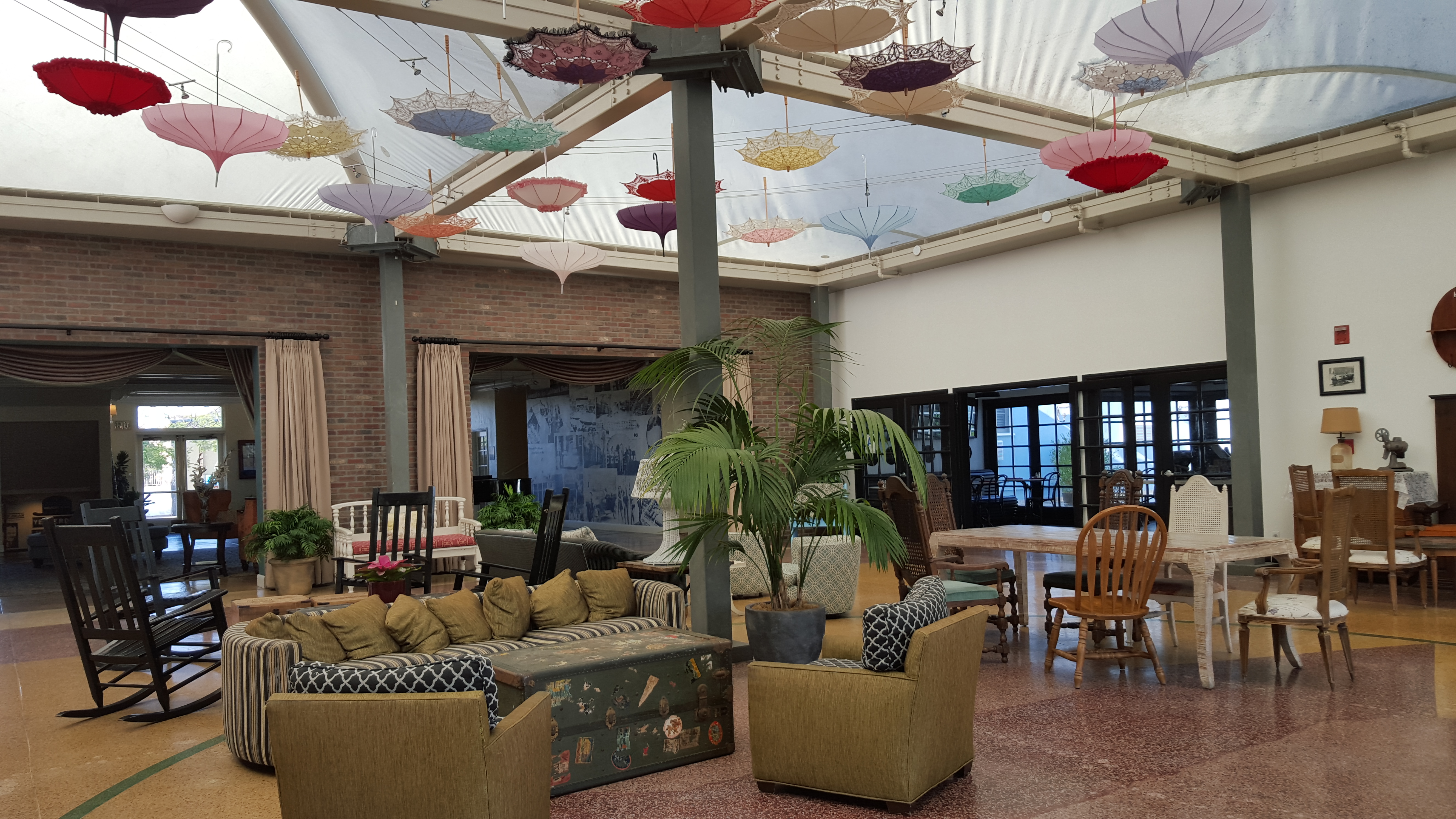
The rooms themselves are clean and relatively basic, but then you get the old bathroom style and the big old windows. The lobby area is really where you feel jazzy. The umbrellas hanging off the ceiling look a little silly in photos, but in person they work.

20150827_171820

And then you can drink San Diego craft beer while overlooking the pool. Good beer outdoors with a view – here’s my number Lafayette, you’ve got my heart.

That time I had a hometown.

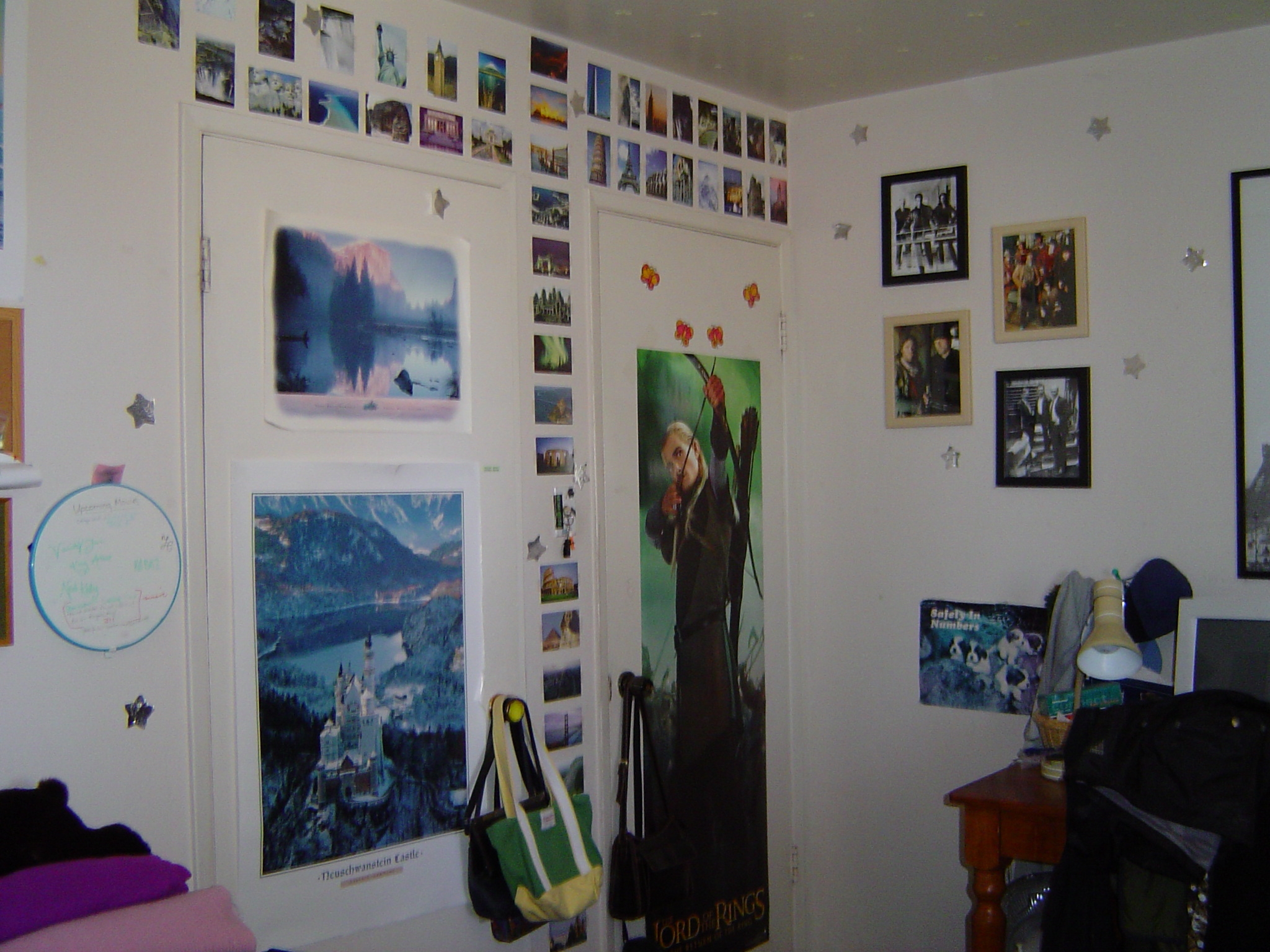
Stuff cool nerd kids liked in the early 2000s./Corner of my high school bedroom.

Stuff cool nerd kids liked in the early 2000s./Corner of my high school bedroom.

Sometimes there is sadness embedded in a present place. It’s too rooted in the sweeping movements of the second hand and no longer able to be the thing it was many pages of the calendar ago.

I grew up in a 1960s suburban ranch style house in the East Bay in Northern California. The house still sits on the same suburban street, but it’s now a much more expensive neighborhood with houses priced only for the very affluent tech workers of Silicon Valley.

It had a driveway, a decent sized front yard and a big backyard with a lemon tree and an orange tree. There was also a jungle of ivy along the side of the house and a lollipop tree. My parents were never very fond of the landlord, who delivered rent increase notices at Christmas, but to me he was just a slightly scary older person who left suckers in the lollipop tree on occasion. One time when he backed out of the driveway he took out the last bush in a row of front yard shrubbery. The little plant stuck to the back bumper of his car and bobbed along in the breeze as he drove away.

The things I remember about living there are very rooted in the physical space. We’d always tell newcomers to look for the house with the “bright green trim.” The bulk of the house was painted an off white color, but the almost neon green paint that framed the house really made it stick out. (Clearly no HOA forcing bland paint colors on the neighborhood.)

When we first moved in the carpet was a brown, ancient almost shag carpet. The kitchen countertops were a chipped mint laminate. In the decade plus of living there the landlord did eventually replace the counters and carpet, but he hired cheap day labor and orchestrated most of the “improvements” himself. Nothing ever quite lined up right.

Nothing quite lining up is also an accurate descriptor of my feelings about my childhood home. My parents always had some resentment toward me considering this my childhood home, but it was. Most of my growing up memories center on the place.

My departure from the Bay Area as an adult-in-training was shortly followed by my parents’ exodus from the place. I use to always make a pilgrimage to the house when I would go back to the Bay to visit friends. Strangers rented it by then, but my mind erased the foreign cars in the driveway and imagined summer nights running through the front yard grass (getting eaten by mosquitos) or days drawing chalk roads and traffic signs on the sidewalk.

My weirdo drive-by visits to my childhood home made sense the first couple years. I’d drive by and little things would change. The neon-y green trim color was toned down. The plants in front of the house were altered. More strange cars parked in the driveway. But still, this is the filter I saw the world through for so many years as a child. This was home, this was a place that made sense. Or at least I fought for it to make sense in my head.

I stopped driving by my childhood home a few years ago. I started realizing that I was assigning some sort of false sense of security and identity to a place that no longer existed. I even feel off telling people I’m from the East Bay. My childhood was there, but beyond that my family historically only dipped their toes in California. We aren’t Californians, though I am a Californian. It’s such a weird disconnect to have in the relationship between people and place; between family and individual identity.

In driving past the old rental house I was trying to have some sense of belonging or roots in a hometown of some sort. In the early years of leaving home that worked to some extent, but now I see the construct I built for myself and the functional role it filled. It did its job and then it retired. It always was someone else’s home in truth, but now it’s also someone else’s home in fiction too.

The place lost its meaning, and with it I’ve had to let go. It use to make me sad, but now I focus more on the bright points of child memory over jarring adult reality. It was there for all the doll soap operas and school lessons, the fake perfume making sessions, and the backyard burritos assembled from fallen lollipop tree leaves and blossoms. I’ll always have the memories of sunny days of running through the sprinkler, roller blading around the concrete slab patio, or having elaborately themed birthday parties. I don’t need a physical touchstone to remind me of these things – all these good things filtered out of the more expansive memory pool.

Roadside: BBQ Chip Road Trip

Michigan has game when it comes to 20th century snack foods.

Michigan has game when it comes to 20th century snack foods aka the beginnings of helping Americans make themselves fat.

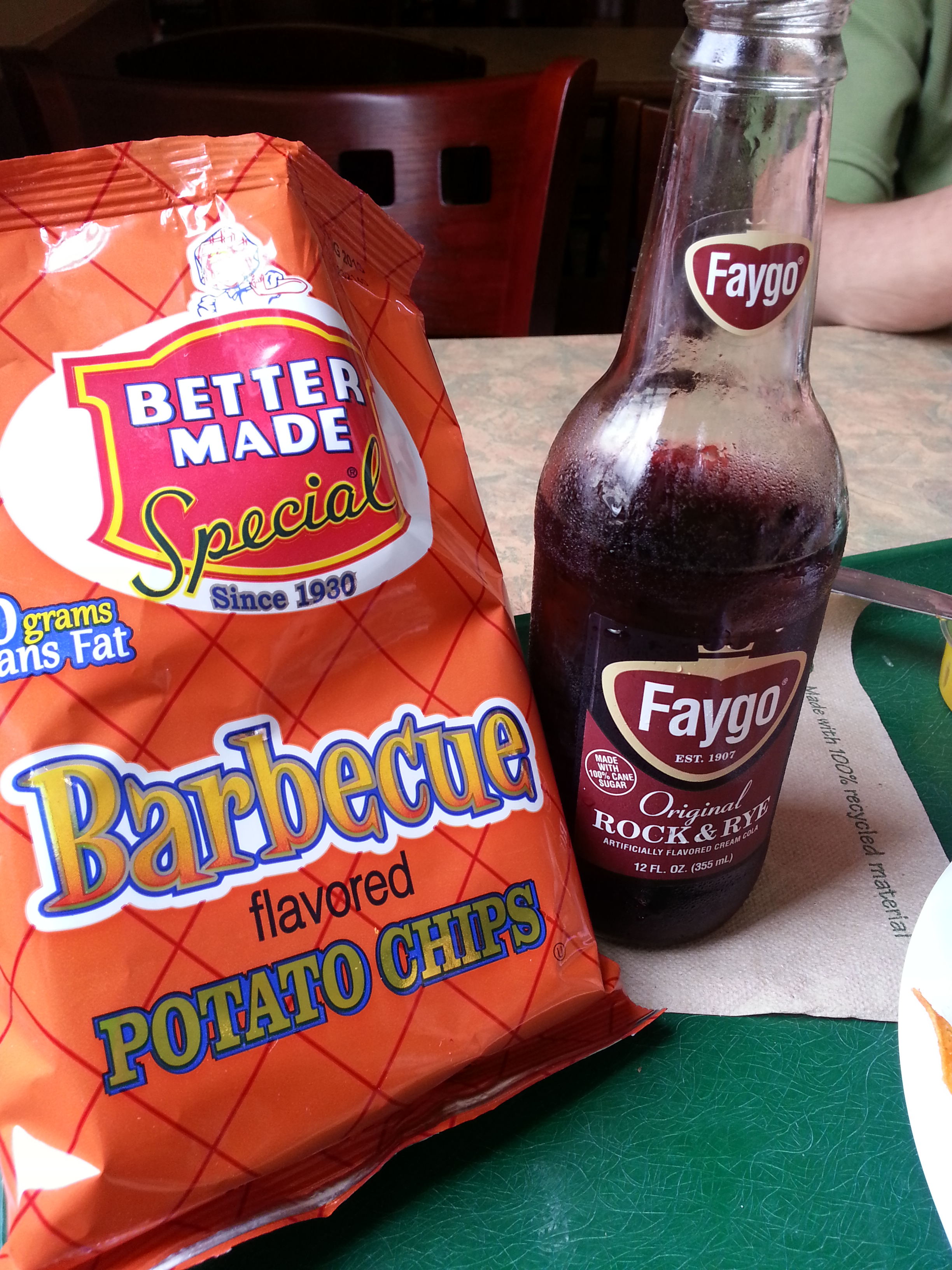
In 2013 I went on a road trip through 11 states in 8 days. Along the road there were plenty of stops at gas stations, and at each one I tried to find something different that I hadn’t seen before. A couple states in I started to realize that there was something regional in the potato chip aisle. Though now-national brands like Lays are well represented across the U.S., little odd ball and generic-y brands would pop up. I decided to make it my road trip quest to find the best of the BBQ chips.

I don’t eat a lot of chips these days, but as a kid BBQ Ruffles were one of my favorites. As an adult I’m a big fan of the spicy heat of Grippo’s BBQ chips, my Dad’s hometown crispy potato. During the road trip from Colorado to Ohio, and then up through Michigan to Wisconsin, Minnesota, South Dakota, and Wyoming, a few chips came close along the way, but I still didn’t find a chip to surpass the Grippo’s spice.

I resurrected the BBQ chip hunt on my latest road trip jaunt through Arkansas and East Texas and figure it’s time to start recording all those BBQ feelings before I complete forget. Still no new champions, but the quest continues. The contenders so far, along with my completely subjective and non-scientific opinions:

Regional BBQ Chip Rankings as of 2015 June:

  1. Grippo’s Bar-B-Q
  2. Better Made Special Barbecue
  3. Golden Flake Sweet Heat Barbecue
  4. Old Dutch Bar-B-Q
  5. Urge Barbeque
  6. Guy’s Barbeque

The Rust Belt region understands the fine art of properly spiced BBQ chips. This is only a scratch on the BBQ dust coated surface, so the rankings will grow as I get the chance to snack in new places. BBQ chip recommendations welcome.