Tag Archives: Los Angeles

1,000 Embers

While getting to the other side of the holiday season, my family picked up strep and pink eye. Then just as we were starting to get better, Los Angeles burst into flames. Thoroughout all of this I’ve been trying to finish up an essay for an application with a prompt related to place, power, community, and archives. In all the goings-ons I mis-read the prompt as asking for 1,000 WORDS, when in fact, it was asking for 1,000 CHARACTERS.

I felt pretty good about it (better than I do about the 1,000 character version I quickly chopped together!), so I’m going to post a blog-i-fied version of it here. It felt cathartic to write this, in lieu of non-stop refreshing a Google search for “los angeles fire” over and over again for a second day in a row.

Because I was trying to be professional in this essay, I did leave out my most gutteral, repeated thought during these last days: that LA is a stupid place, but I love it so deeply and dearly. And am heartbroken for my big-city-patchwork-of-neighborhoods community.


As I was completing the final touches on a draft description to outline my relationship to my work environment as place, wind swept embers into raging fires and upended my broader community. Los Angeles is a large city of neighborhoods, and although they can be distinct and unique, we are all still knit together and connected. The city has a long history of violent division and social disparities, but it is our differences that are also often part of the local beauty of this place. And we are united when we are all under threat.

I am not from Pacific Palisades or Altadena, but these microcommunities in my city community are still part of the interconnected body that make up the city at large. The thick chunks of ash sprinkling down on my neighborhood are pieces of someone’s home, someone’s sense of hope, someone’s sense of safety. Thankfully my rental abode retained power, and we weren’t under an evacuation order, but the pain of seeing those in your place, your city, have these things wrenched from them so quickly, and with such violent force – I cannot help but feel an ally in community. Although we are different and experiencing different things, we are together in pain for this physical environment we shared and the varied things that a place can promise us (whether real or illusioned). 

We checked on coworkers and friends; many under evacuation orders. One friend watched her son’s preschool burn down on television. How do you retain a sense of place and community when the physical representation of that history goes up in smoke? There are many parts of the United States where the scars of history are not physically represented, but represented in intergenerational trauma and invisible scars that the bearers are not always even cognizant of. Our bodies are sites of history. The archival record can also provide a sense of place when geography is decimated.

Los Angeles is my adopted home, but my ancestors aren’t from here – neither indigenous nor early colonizing migrants. As a kid I lived in a few different states, and as a mixed race person, there is no one singular place that I belong to; where my whole self will be seen and recognized. My existence is a record of 20th century American imperial military incursions. Feeling unmoored can be personally challenging, but there is also power in not being anchored to a singular idea.  I must make a future space for myself and my communities outside of the dominant historical, social/cultural boundaries of “race” and “ancestry” that American culture has defined as tools of political control and power. 

As a teaching faculty librarian, I work with a student body that the government labels as “HSI” or a Hispanic-Serving Institution, which means at least 25% of our full-time equivalent campus undergraduate student body identifies as Hispanic or Latino. We also have deep pride on campus for the work of campus leaders (students and faculty) in the late 1960s in founding some of the earliest Chicana/Chicano and Africana Studies programs in the United States.

As instructional faculty, I sit by default in a position of power. I am not Latina or Black, yet the students in my classes often are. As a perceived white-only person, I call out our archives’ historical collecting problems, the bias in the collection development process, and our on-going (and endless) work related to reparative description. I allow myself to be vulnerable, and try to center the humanity of people represented in our archives, connecting students with the idea that their own histories are valuable, and that they have the power to shape new historical narratives that go against dominant white, heteronormative, male takes on the past.

What I want to convey to students is the need to understand where we are, who has historically defined our places, and the need to unmoor ourselves from what holds us back from transformation. The need to be comfortable with the unknown and the gray areas when things are not well defined, as we search for new ways of being and knowing. At the same time, I have to be careful with my default faculty power, and make sure to allow myself to be humble about what I do not know.

In the archival field we are trained to impose order over chaos; to label everything in a uniform and recognizable fashion; to make things findable, often at the cost of individual authenticity. Both in what I do with students, and in what I do in leading our archives unit’s accessioning and processing workflows, is with the aim to create a space where it is safe to question what is established. I want students to see archives as a fluid and conflicting space to interrogate, as well as a space where there is room for their own stories. In this same way I want our Archivist team to feel supported in doing work, while also having space to question established practices. To have empathy for past archival missteps, is to also make space for us to forgive our present missteps, priming a space for reflective growth.

Our work place is safe amidst these fires. As the firefighters work to control and dampen down the blazes, we must mourn, and prepare to reshape our sense of place and our relationship to one another in this sprawling city-community. We will need to remember and reflect, while also letting go to make room for more nuanced narratives. Archives can play a role in helping us do this work, as individuals, as members of broader and continually evolving communities, and as a nation.

As I am not “from” here, I sometimes forget that Los Angeles is my place too. But these catastrophic fires are a strong reminder that this IS my place, and I am in and of community here. I am lucky to be in my physical home tonight, but my heart is aching for my community home.

Three year anniversary.

This is the three year anniversary for me and my current apartment.  It’s the longest I’ve lived in the same place as an adult.

Part of me wonders if I should be disappointed that my old wanderlust was replaced by moving and shaking of a career variety instead of a new-city-new-neighborhood variety.

But everytime I ask that question I say no.  I like who I am and where I am and I feel like what I’m doing is worthwhile.

Everytime I help researchers find what they need, whether they are 10 or 65, I know I’m in the right place.

Yesterday I helped middle school aged kids locate online resources for their National History Day projects.  One student was researching a mid-20th century TV program’s impact.  She was incredibly articulate about her subject, though her mother said multiple times that they picked a “light” topic this year; as if there was some unspoken need to excuse the choice of a pop culture topic.

She didn’t need to excuse her students’ project, especially to me.  Everything is important.  Everything has meaning and value.  It’s all connected in the domino run that is life.

When I first moved to Los Angeles I went to AAA and asked them for all their Los Angeles maps.  I cut them up so the maps fit against one another where one ended and the other began.  I wanted to master the roads and freeways – as a child of the suburbs I was programmed early on to view places through windshield glass.

I don’t have any LA maps on the wall anymore.  There’s still uncharted territory in my mental map of the city, but this is home.

I’ve found my corner.  I feel a mix of delight and disgust that I’ve settled into my routine and that I like it.  I am right where I am suppose to be – at least in this very moment.

The sublet room I lived in when I first moved to Los Angeles.  Full of someone else's furniture and not very well decorated, but what was important made it on the wall.

The sublet room I lived in when I first moved to Los Angeles as a 21 year old. A tiny box of a room right off the living room.  It was full of someone else’s furniture and not very well decorated, but what was important made it on the wall.

The 10: Crenshaw

Ok, so maybe when I set out to write about my relationship to the 10 and the Westside of LA and how it’s all chronological, maybe I should’ve left off Crenshaw.  But I think the Crenshaw exit off the 10 has a lot to say about why Los Angeles is appealing to me, even if it’s not the Westside, and my Crenshaw tales aren’t my first LA experiences.

First and most importantly: Earlez’s Grille.  Where I (a whitasian, but mostly white looking person) went up to a counter in a restaurant staffed by African Americans and Latinos (in a mostly African American neighborhood) and specifically ordered a “playaz punch.”  Because Yelp told me it was a deliciously delightful sugary drink.  The cashier looked amused as all hell, handed me an empty cup, and gestured behind me, noting that, “The fountain drinks are over there.”  And yeah, I looked behind me and there was the playaz punch in all its artificially pink glory, next to a tank of lemonade and a coke machine with the usual suspects.  So really all I needed to say was that I wanted a small drink.  Whoops, live and learn.

The most important thing about Earlez’s Grille (sadly temporarily closed at the moment, but in the process of moving further south down Crenshaw to make room for the metro Expo line) is their veggie dog with veggie chili and a side of seasoned french fries (I think my playaz punch expectations were too high.).  One of the owners was also on site the first time I went and he came over to my table and asked what we thought of the food.  Not much is cooler than actually meeting with an owner of an establishment you’re patronizing.

In the context of this trip down the 10, this experience sums up three of the most important things about the opportunities Los Angeles offers:

(a) Food adventures, because at the heart of why I love Los Angeles is a veggie chili dog or some weird flavored ice cream or vegan nachos at 2am.  LA tastes great.
(b) The chance to put myself in neighborhoods and situations that are completely foreign to the context I grew up in.  I don’t generally consider myself all that outgoing, but I occasionally have near masochistic streaks of wanting to feel uncomfortable and challenge myself to see how much I can make myself look like a fool.
(c) Talking to people who are connected to the places you visit.

I’ve felt comfortably uncomfortable in all sorts of LA neighborhoods, I’ve eaten some great food, and I’ve talked to a bunch of people, and that is what makes me happy.

The 10: Los Angeles becomes less of a wasteland.

Before we go for a drive on the freeway, here is some background on my evolving LA relationship:
My very first foray through Los Angeles was when I was around 8 years old.  I “saw” it from the freeway as my Dad drove the family down to Disneyland.  Despite living in LA since 2008 this is still the last time I went to the happiest place on earth.  I remember liking the tea cups and getting lollipops shaped like Mickey ears and getting the crap scared out of me on a very dinky roller coaster I didn’t want to go on.  That’s about it.

The next very brief visit through Los Angeles was a trip to UCLA right before applying to colleges.  My Dad was again in the driver seat and I mostly remember UCLA looking preppy and my Dad giving a homeless woman $5 at a stoplight.  I also visited UCSB that trip and at that time the UCSB campus and area pretty much kicked UCLA’s butt in my mind.

Despite my newfound UCSB dedication and love (that’s where I ended up going to school), while I was in college in Santa Barbara I went down to UCLA to visit high school friends.  I still didn’t feel particularly enamored of the city, but really all I saw was Westwood.

Freshman year of college one of my closest UCSB buddies decided she wanted a weekend in Los Angeles for her birthday.  We spent most of the time in Venice Beach and Santa Monica.  Kind of funny we went to a school on the beach and we drove further south for more sand, but my friend is much more a beach person than me and I guess beach culture in Venice Beach is a special kind of beach culture of its own.

My true appreciation of Los Angeles really first flickered while I was in England.  I studied abroad in a program with a bunch of other UC students.  One of the students went to UCLA and we became friends through our mutual love of food based adventures.  I told her my stereotypically Northern Californian perspective of Los Angeles (a negative one), but she was convinced I would love the place if only I gave it a chance.  I’m pretty sure the great food in LA was part of that argument.  I was skeptical, but I told her ok, I’ll be more open minded when I get back to the states.

I got my chance to be more open minded at the end of college.  Back in the lovely beachy town of Santa Barbara (or more properly Isla Vista, the student community next to UCSB) things started to feel a little constricting.  I still loved school and had a great time with friends, but after a year gallivanting around Europe I needed some more adventure.  The Santa Barbara area is gorgeous, but it felt too rich and too small.

At this point in time my friend’s sister had recently started going to med school at UCLA, so all of a sudden we had a place to crash at the end of the 90 minute drive down the 101 to Los Angeles.  We started heading out to LA once a month to volunteer with a program called Reading to Kids.  We’d head down south on Friday afternoons, hang out around the Westside, and then go to the outskirts of downtown LA early Sunday mornings to read and do book themed crafts with elementary school kids.

After Reading to Kids we’d play tourist, and I think it was around this time that I ran across Grand Central Market.  Grand Central Market’s a big food market with stalls and small restaurants nestled inside the ground floor of a historic building in downtown LA.  It’s been around town since 1917 and I’m a sucker for anything old, especially if it involves food.  (When I start to feel food obsessed I just compliment myself on my great caveman survival instincts, because a passion for food has got to say something good about your priorities for existence, right?)

Los Angeles became the place of escape and adventure that Santa Barbara was not.  It was exactly where I wanted to be.

I looked on craigslist for open rooms.  Graduation was nearing, I had no job lined up and absolutely no idea what I was going to do with myself, other than the fact that whatever I was going to do was in Los Angeles.  It was a combination of being more familiar with the Westside and finding a good priced apartment with some recent UCLA graduates that led me to Culver City.  My foray into escape and adventure had begun.

(P.S. I recently stayed up way too late for the first time in ages because I couldn’t put a book down.  The giant bags under my eyes today are thanks to Kristin Newman’s What I Was Doing While you Were Breeding.  Her tale of her travel and man escapades after getting out of a 6 year long relationship when she was 26 hits way too close to home (RIP LDRC), but in a good too close to home way. (Like in a I hope I have some international escapades in my future way.)

The tale of my relationship with Los Angeles is slightly incomplete without talking about how my relationships with the people of Los Angeles fit into the physical landscape, but this is all a little too fresh to go Newman-style on that part of my city experience.  This is mostly just a super narcissistic tale of my relationship with Los Angeles.  You and me city, you and me.

I do have another project which will remain buried in my hard drive for years and years (and years) from now that involves fictionalized short stories based on (boy) relationships I’ve had throughout my life.  I’ve written an introduction (about a boy I obsessed over in kindergarten) and one set in an apocalyptic future (because the last few weeks of undergrad can feel really apocalyptic) and they are pretty cathartic.  If there are still blogs in 2050 I might share these then.  But for now – Los Angeles off the 10!  Next exit: Crenshaw.)

The 10 Time Tunnel.

I hardly ever get over to the Westside of LA these days.  The area bordered by the Pacific Ocean on the west and (depending on who you talk to) some north-south street on the east.  An often flat area of the city crowded with apartments or plotted out with ridiculously expensive houses on small to gigantic land parcels.

This was the Los Angeles I got to know first and where I initially became enchanted, but now I tend to avoid the area like the plague.  After a couple years of living there it became more of a homebase than a homeland and I found myself driving out toward downtown or further north or east.  I’m not a big beach person, so this could be part of why I’m less enthralled with that part of town.  It’s also more expensive and people seem to express their road rage and honk at each other more often.

Despite my now disenchantment with that neck of the woods, from time to time I get a little nostalgic about my growing pains years in Los Angeles.  The other week I drove out to Culver City to visit Surfas.  As I drove down the 10, creeping closer to the Pacific, I was also getting closer and closer to those early days of living in the city.  With each exit off the freeway memories kept popping into the present.

I’ve had this idea in the back of my mind for awhile now that I should write some love letters (of a sort) to those exits on the 10.  I have friends over on that side of town still, and on the rare occasion when I test the kindness of traffic and venture out that way I always get this feeling that I’ve entered some time tunnel.

Crenshaw-La Brea-Fairfax/Washington-La Cienega-Robertson-National-Overland-the 405

It’s an almost exactly chronological backwards trip into the far dusty corners of the memories of my Los Angeles existance.  The exits west of the 405 I’m a little less nostalgic about because I’d generally take streets to get to parts of Santa Monica or Venice.  And yeah, I’d probably cut the beginning of the “Westside” off around La Cienega, but the Fairfax, La Brea, and Crenshaw exits were also part of my Westside living experience so I’m including them too.  I’m using Westside as a loose and personal concept more than a hard and fast geographic outline.

So I’m going to start off with my very earliest flickering memories of Los Angeles and then get off the 10 at Crenshaw and time travel my way backwards, exit by exit, to those very first forays into that beautiful, crowded, polluted, diverse, segregated, delicious, rich, poor, historic, engaging place that is the city of Los Angeles.

Pico Adobe, Los Angeles, California

Inside the Pico Adobe

Inside Pico Adobe

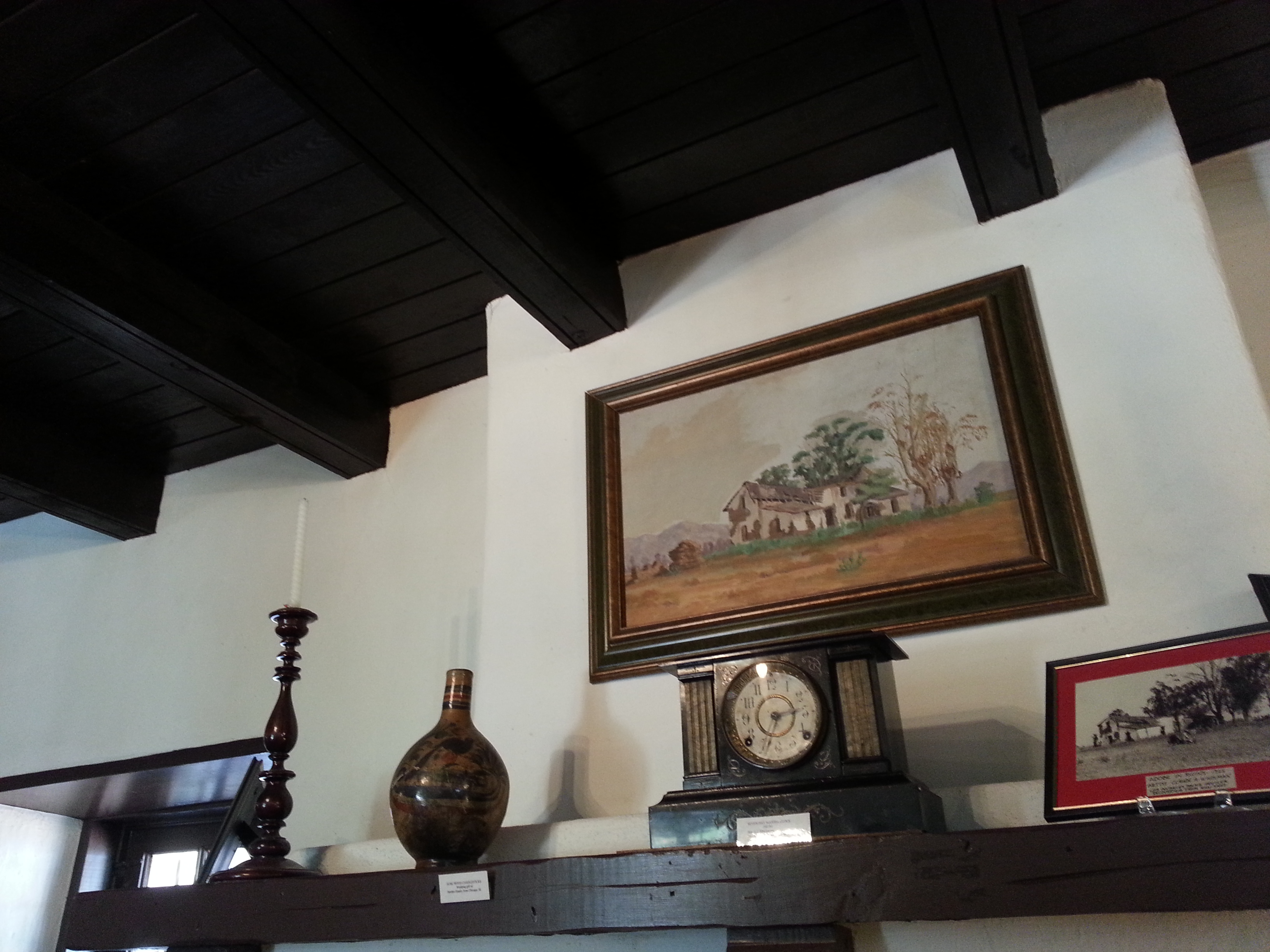
One of the things that I love about Los Angeles, but also one of the things that makes its history so enigmatic, is the tendency to find very historic things next to very unglamorous things.  Earlier this week I got a chance to visit the Pico Adobe.  When it was built there was only one other second story house in existence in all of Los Angeles (according to the docent).  The core of the structure was built in 1834 and additional rooms were added on in following years.  Although it was blazing hot outside it was cool and comfortable inside, and I marveled at the usefulness of old timey construction methods.

The adobe is in the northernmost reaches of metro Los Angeles – and right next to a trailer park.  This juxtaposition of über historic California craftsmanship with a cluster of small thin walled dwellings is somehow appealing.  It’s this sort of tucked away quirkiness of Los Angeles history that often makes it difficult to parse, but also gives it its charm.

In the backyard of the Pico Adobe

In the backyard of the Pico Adobe

Me and Los Angeles.

I have over a dozen posts sitting unposted and partially written in notepad files in my Dropbox.  Time for some fall cleaning.  Here is one of the more finished posts:

I listen to Camera Obscura because it puts me back on a train in England. Sheep. Little green hills. The feeling of going.

I left my heart in San Francisco, but found a new one in Los Angeles.

My Los Angeles is not the same as their Los Angeles.  I realized that one of the things I love most about this place is that it it is ultimately mine.  Even though I share it with others and our experiences intersect like circles from a Venn diagram, there is always that part of me that doesn’t touch anyone else.  Just me and LA.

I think I finally decided I was an LA resident when I flew back from my parents house with a carry on bag packed with the favorite books of my childhood.  A lot of my stuff is in a crawlspace at my parents’ house in a city I never really lived in.  It’s left there for the day I “settle down,” if there is ever such a thing.  There is still a lot in the crawlspace, but those books are the most valuable things from teenagedom, because they are conduits of ideas and places that I existed in at that point in time.

I finally became a grown up here.  I put nails in walls and hung pictures on them.  No more posters and scraps of paper taped on walls.  Though it took a juvenile move to get me here.

At the end of college I moved down to LA without a job and with only enough savings to pay for a few months of rent.  It was just as the recession got going, but I was unaware of economics and blindly and foolishly optimistic.

A quickly dwindling bank account added too much urgency to my job search, and the only position I could manage to get in a timely fashion was the exact same type of job I did in the summers between high school and college years.  I hoped working as a receptionist at the marketing company would be my foot in the door, but instead I got disillusioned by the size of egos.  The office was up in a high rise building, physically held up by steel and architectual engineering, but figuratively held up by inflated measurements of self worth.  Answering phones and serving coffee to Hollywood types was mentally unchallenging and it soon became clear that these were not my people and there wasn’t any other place for me at that company.

For sanity’s sake I enrolled in an MA program and planned to hold out at the company for just a bit longer so I could squirrel away extra money for school.  It was both fortunate and unfortunate that two months before I planned on quitting, the company laid off about a third of its workforce in order to do some downsizing and restructuring.  I was bummed not to have the extra cash in savings and to be robbed of my chance to quit on my own terms, but also relieved to not have to deal with the tedium anymore.  That summer I had the opportunity to reestablish my worth as a living human being, so in the end things all worked out.  I was relieved.

And like any relationship, my relationship with the city is fluid. I’m still not sure if it’s going to dump me in the next couple months, or if I want to work hard enough to fight to keep our relationship alive.  What is that saying about ships passing in the night?

———-

As a postscript: Since I wrote this post I found out that I’ll probably be here for another year at least.  The romance continues.

LA.

Photobucket
Culver City and Los Angeles from Culver City Park

I returned to Los Angeles at the end of August and encountered a giant workload which has kept me from having any sort of time/motivation to update this blog. However, I haven’t forgotten it exists! I’d like to continue to record my professional and personal adventures as a young adult type person, now returned to the City of Angels (and maybe also do a little reflecting on the close of this summer’s work).

There are four general threads that currently run through my life at the moment:
(1) Finishing my final year of grad school
(2) Processing a collection at my wonderful new/old Western Museum workplace
(3) Repping for the City of Los Angeles’ SurveyLA project
(4) Being as involved as possible with the Los Angeles archival scene

My other non-official duties involve:
(1) Sweeping up copious amounts of dog hair at home (from my roommate’s adorable but super shedding pup)
(2) (attempting to) Feed myself somewhat nutritious homemade things (takes time, time, time! sigh)
(3) Find time for boyfriend and friends (Time?! What is this?)

First though, I’ve gotta finish up a historiography paper on immigration. Personally, I find the topic of “immigration” a little broad for a concise 8-10 pager, but that’s what the boss ordered, so I’ve gotta deliver. One paper coming right up!

Blank Slate.

In one month I ship off to York, Maine to start a 2.5 month internship.  I have never been to Maine before.  The closest I have ever been is Washington, D.C.  Or maybe Cincinnati, OH?  I’m not sure which one is actually closer.  Maybe this fact tells you something about what I know about the East.

That is a big part of why I am doing this though.  I am in love with the West Coast.  This is something I already know.  What do I not know?  The East Coast.  I want to find out if there is something I will love about that geography too.

The most difficult part in all of this is that I am leaving my human love in Los Angeles.  This is a big part of the challenge.

And so my countdown to the end of my first year of grad school has turned into a countup to my Maine adventure.

Palms, Los Angeles from friends’ rootop

March 2010